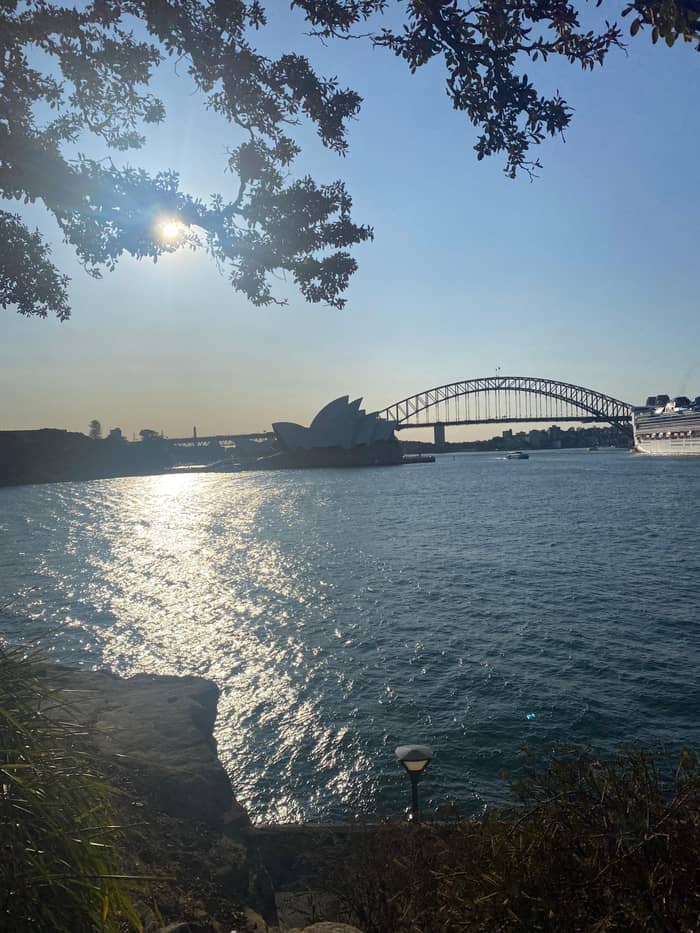
Founded 1907
The surf club
Bondi Surf Bathers
- Known forFirst surf club
- LegacyCaps, reel, flags
- SeeClubhouse on the beach
Guides
Language
Currency
Find a datestarting at $107 · free cancellationHelp with your choice
Summary
Bondi Beach is famous as the home of Australia's first recognised surf lifesaving club, founded in 1907, the scene of the Black Sunday rescue of 1938, and the quintessential Australian beach.
Why it matters
Two taps to your Bondi
Say how you like to spend a morning and how much time you have, and a matching listing appears with its from-price.
Your ideal pick
from $69
It lasts 2 hours in groups of up to 5 and is rated 4.88 from 1,007 reviews.
Your ideal pick
from $107
It lasts 4 hours with pickup included and stops at Bondi Beach after the harbour sights.
Your ideal pick
from $69
It lasts 1.5 hours in groups of up to 8 and is rated 4.76 from 182 reviews.
Plenty of beaches have golden sand. Bondi has a story: an Aboriginal name, the birth of surf lifesaving, the day the sea swept hundreds out, a winter swimming club, and a place in how Australia sees itself.
Editorial team, bondibeachtour.com · Updated November 8, 2026 · Quick read: 8 min
Why is Bondi Beach so famous? The National Heritage listing gives the official answer: in Australia and abroad, it has come to be seen as the quintessential Australian beach.7 It was entered on the National Heritage List on 25 January 2008, alongside places chosen for what they say about the nation.1 That is a lot of weight for a strip of city sand, and it is the thread that runs through every story below.
The listing ties that fame to a particular idea of Australia. During the Depression, it says, beaches became egalitarian playgrounds, and working-class Bondi became the clearest example of that idea.8 Along with the digger and the bushman, the lifesaver earned an iconic place in the national imagination, and the lifesaver's story starts here.9,10 Seen that way, Bondi is less a beach than a symbol: of leisure open to everyone, of volunteers keeping strangers safe, of a life lived outdoors.
There is also a simpler reason: it is close. From Town Hall station in central Sydney, public transport reaches Bondi in about 30 minutes.11 A world-class surf beach that you can reach on a city bus has always drawn crowds, and by 1929 an average of 60,000 people visited on a summer weekend day.12 Nearness turned a beach into a public stage. Everything that happened here, from rescues to royal visits, happened in front of a crowd, and the crowd carried the stories home.
Firsts on the sand
| What | When | Why it matters |
|---|---|---|
| Surf reel display | 23 December 1906 | A rescue tool used for decades |
| Surf club founded | 1907 | Start of organised surf lifesaving |
| Lifesaver caps | Summer of 1907-08 | Red and yellow quartered caps |
| Bronze Medallion squad | 2 January 1910 | The lifesaver's basic test |
| Surfing newspaper | December 1917 | The Surf, by Bondi surf bathers |
| Patrol flags | Wartime | Swim between the flags |
From the National Heritage listing for Bondi Beach; dates as the listing gives them.27,10,28,29,30,31
The Bidjigal, Birrabirragal and Gadigal people are the traditional custodians of this stretch of coast.16 The Waverley Council library records that by first contact in 1770, Aboriginal people had been living around Sydney for at least 20,000 years.17 Rock engravings survive on the headlands at North Bondi, Ben Buckler and Mackenzies Point.18 Campsites at Ben Buckler were still being reported in the 1870s, long after the colony had spread around the harbour.19
The name is older than the beach's fame. The library traces it to a Dharawal word for a loud thud, the sound of waves breaking on rocks, and notes the same word was linked to clubs or fighting sticks for the thud they make.6,20 The earliest written record comes from surveyor James Meehan, who called it Bundi Bay in 1809.13 The library is careful to add that the origin is still debated.21
The sand itself has given up history. A gale in 1899 blew away enough of the beach to expose a large Aboriginal campsite, and stone tools found at the northern end that year gave their name to a whole class of artefact, the Bondi point.22,23 Much of that site, including the remains of a shell midden, now lies under Queen Elizabeth Drive.24 So when you cross that road to the sand, you are walking over what the council library calls a highly significant Aboriginal campsite.22
For decades after 1810 the beach was private land: a grant of 200 acres around it went to William Roberts that year.36 In 1855 a later owner let the public use the beach and the land behind it as a picnic ground and pleasure resort.37 In June 1882 about 10.3 hectares were resumed and dedicated as a public reserve, and in 1885 the local council became its trustee.14,38 That is the short answer to who owns Bondi Beach: it has been public land, managed by the council, for well over a century.
Trams made Bondi a city beach. The first line reached the southern end in 1884, and a regular service from Circular Quay began in 1902.39 The trams also left a saying in Australian English: to shoot through like a Bondi tram, meaning to leave in a hurry.40 By 1928 the number of visitors carried there by tram and bus was estimated at 14 million.41
Then came the building that still frames the beach. Bondi Pavilion opened on 21 December 1929 before a crowd estimated at 160,000 to 200,000.15,42 Advertising in the 1930s called Bondi the Playground of the Pacific, with the pavilion at the heart of the pictures.43 That is the image that travelled the world: arches, sand, bathers and surf, with the city just out of frame, and it fixed the beach in the minds of people who had never been there.
The icons
Founded 1907
Bondi Surf Bathers
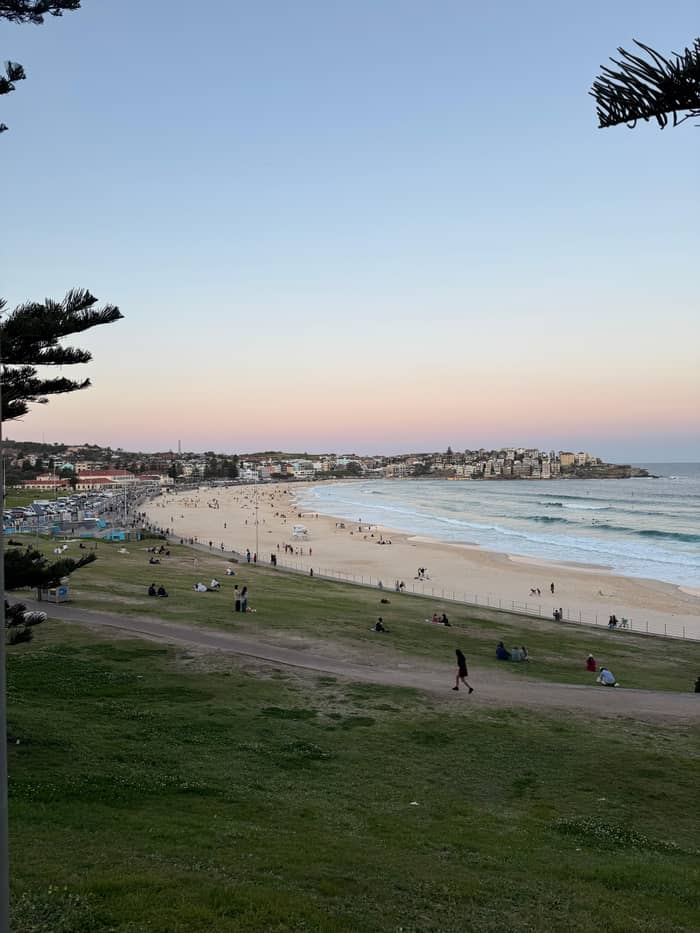
Founded 1929
Winter swimmers
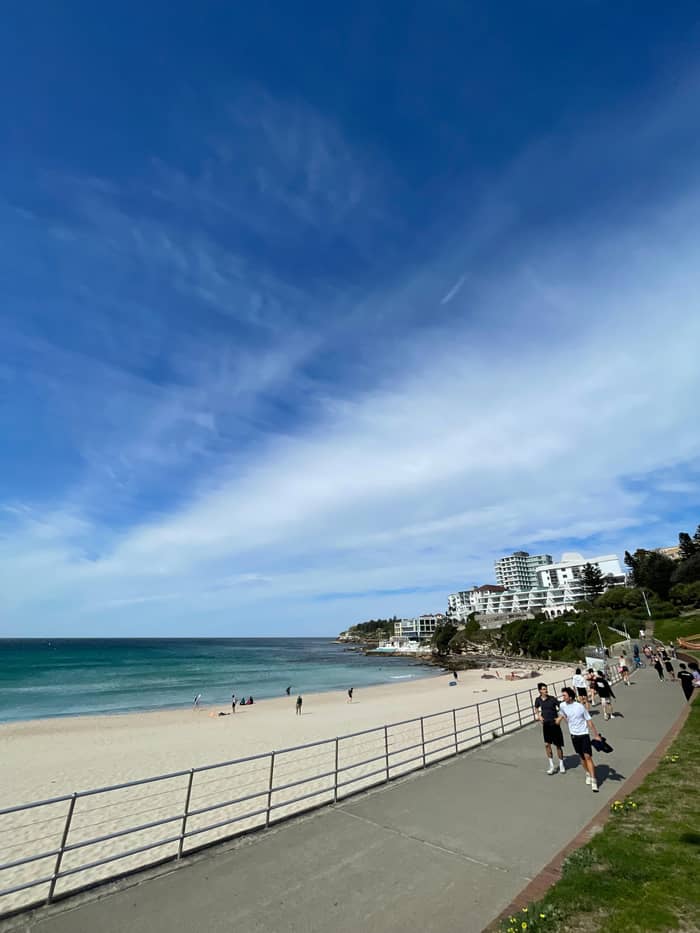
Opened 1929
Inter War style
This is the heart of Bondi's fame. Destination NSW describes the Bondi Surf Bathers' Life Saving Club, set up in 1907, as the oldest surf lifesaving club anywhere.2 The National Heritage listing, more cautiously, calls it the first recognised surf lifesaving club in Australia, from which the movement spread through the state, the country and the world.10 Both descriptions agree on what matters: organised surf rescue grew up on this beach and spread from here.
Many of the tools of surf rescue began on this sand. Bondi saw the first display of the surf reel on 23 December 1906, and the red and yellow quartered caps of lifesavers started here in the summer of 1907-08.27,28 The first Bronze Medallion squad was examined at Bondi on 2 January 1910.29 Even the flags began here: they were introduced at Bondi in wartime, when there were too few members to patrol the whole beach.31
The movement grew huge. By 2006, Surf Life Saving Australia counted 120,000 members in 305 clubs, and lifesavers had rescued more than 520,000 people in 80 years of records.46,47 Professional lifeguards now patrol Bondi all year, and their work features in the long-running TV show Bondi Rescue.48 The show puts on screen what the heritage listing describes: a crowded surf beach kept safe by the people in uniform.
Live it
Select an experience and a head count to see the from-price for everyone.
Compare 2 alternatives
Select an experience and a head count to see the from-price for everyone.
≈
View≈
ViewConverted at the ECB reference rate, from-prices as listed by GetYourGuide. The precise amount is shown when you book.
Milestones
1809
Surveyor James Meehan records the name.13
1882
About 10.3 hectares are dedicated to the public.14
1907
Bondi's surf bathers form their lifesaving club.2
1929
1938
2008
Bondi is entered on the list in January.1
On Sunday 6 February 1938, three large waves hit Bondi Beach one after another.4 About 35,000 people were on the beach, and a group of lifesavers was about to start a surf race when the waves swept hundreds of people out to sea.49 A large sandbank and the backwash of the waves carried them out.50 Within minutes the beach turned into the scene of a rescue on a scale nobody had planned for, in front of thousands of onlookers.
Eighty lifesavers went in, and many had to be rescued themselves as panicking swimmers grabbed their lines.25 The National Heritage listing counts 300 people rescued, 60 needing treatment and 35 unconscious and needing resuscitation.3,26 Waverley Council's library gives a lower count: about 250 swimmers needing help and 150 rescued.51 Four people could not be revived, and a fifth body was found some days later.52 It remains the largest mass surf rescue recorded in Australia.53 More than any other day, it showed what the volunteer clubs were for.
Black Sunday showed the country what volunteer lifesavers did, and it fixed Bondi's place in that story. When Queen Elizabeth visited in February 1954, Bondi staged a Royal Command Surf Carnival for her, and Marine Parade was renamed Queen Elizabeth Drive in her honour.54,55 The road behind the beach still carries that name. The date chosen was 6 February, exactly 16 years after Black Sunday, linking the royal day to the disaster.56
Video
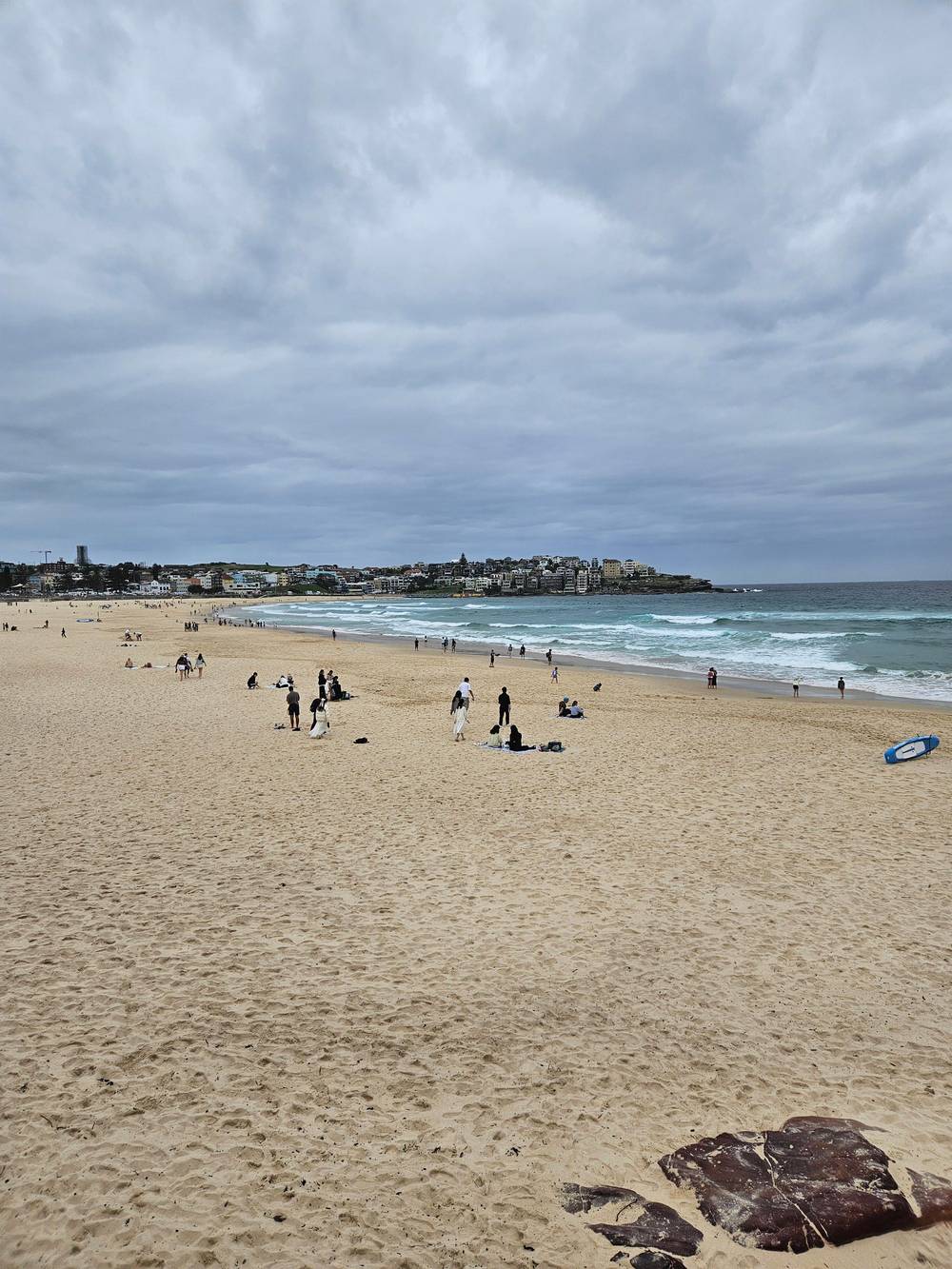
Life is Often on YouTube · Nothing is fetched until you hit play.
has come to be viewed both within Australia and internationally as the quintessential Australian beach
See the story
Bondi's other famous club swims in winter. The Bondi Icebergs were formed in 1929, and to join, members had to swim in the baths on at least 3 of every 4 Sundays through winter for 5 years.5,57 The club admitted women from May 1995, and its building, reopened in 2002, now houses the headquarters of Surf Life Saving Australia.58,59 The pool below it is the one Destination NSW calls among the most photographed in Australia, with waves spilling over its seaward wall.32
Surfing culture has deep roots here too. The first surfing newspaper in the world, The Surf, was founded by Bondi surf bathers in December 1917.30 Bondi now holds the status of a National Surfing Reserve, and the tourism board suggests it for anyone trying a board for the first time.35 Surfers can be seen in the water from dawn to dusk all year.60 That mix of a working surf break and a city beach is part of the appeal: on one stretch of sand you can watch experts and beginners side by side.
The beach keeps adding chapters. In 2000 it hosted the beach volleyball competition of the Sydney Olympic Games.61 Each spring Sculpture by the Sea brings more than 100 works to the clifftop south of the beach; 2026 marked its 30th year.62,63 Every one of these chapters adds to what Bondi Beach is famous for, and each gives people a fresh reason to come that has nothing to do with sunbathing.
Why is Bondi Beach so popular today, beyond its history? Partly because it does so much in a small space. There is surf for beginners and experts, an ocean pool open all year, a heritage pavilion, weekend markets and a strip of cafes and bars, all within a short walk.64,65,66 That mix of surf, history and city life within a short walk is what keeps people coming back, and it means a visit works whatever the weather.
It is also the starting point of the coastal walk to Coogee, which Destination NSW calls one of the most iconic walks in Sydney.67 The coastal path from Bondi to Coogee runs 6 km along sandstone cliffs, past Tamarama, Bronte, Clovelly and Coogee, and is a whale lookout from May to November.68,69,70 Many visitors come for the beach and leave talking about the walk. Separate guides on this site cover the route, its timing and its sights.
Fame has its costs. Weekends in summer are crowded, and the sea that made Bondi famous still demands respect: swim between the flags, which were first set out on this very beach.71 Come early, walk the headlands, read the plaques, and the stories on this page are all there to see on the ground. The pavilion, the surf club, the Icebergs pool and the carvings sit within one easy walk of each other.
FAQ
The national listing took effect on 25 January 2008, for its role in beach culture.1
The beach's professional lifeguards and their rescues feature in the TV show Bondi Rescue.48
Bondi hosted the Sydney Olympic Games beach volleyball competition.61
Sources
Planning a Bondi day? Ask a real person here.